Kidney development
Modeling how human nephron structures form from progenitor states.
Research
The lab's work centers on directed differentiation of pluripotent stem cells into nephron-like structures, then using those tissues to model kidney development, injury, genetic disease, organoid-on-chip physiology, and translational applications.
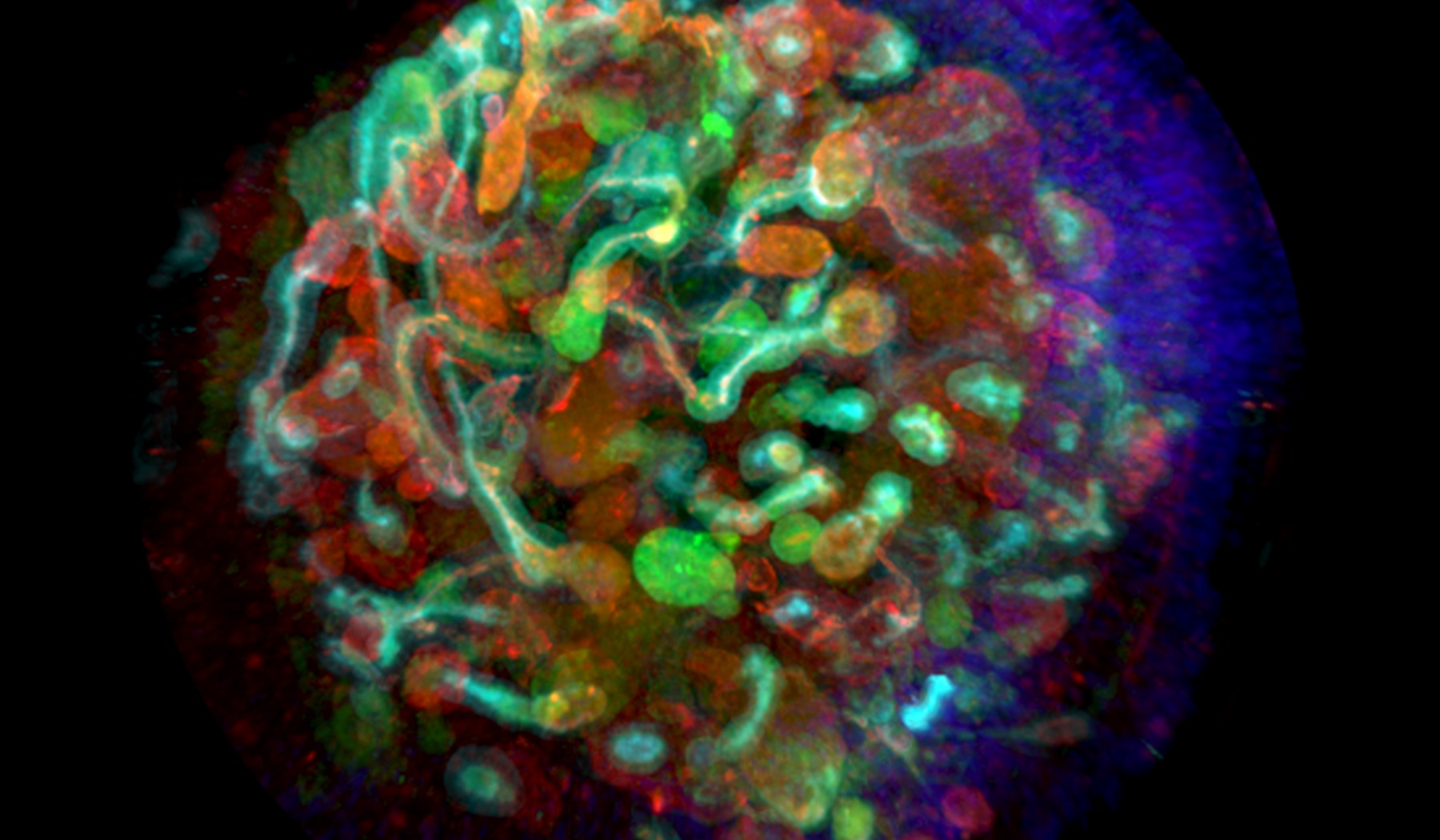
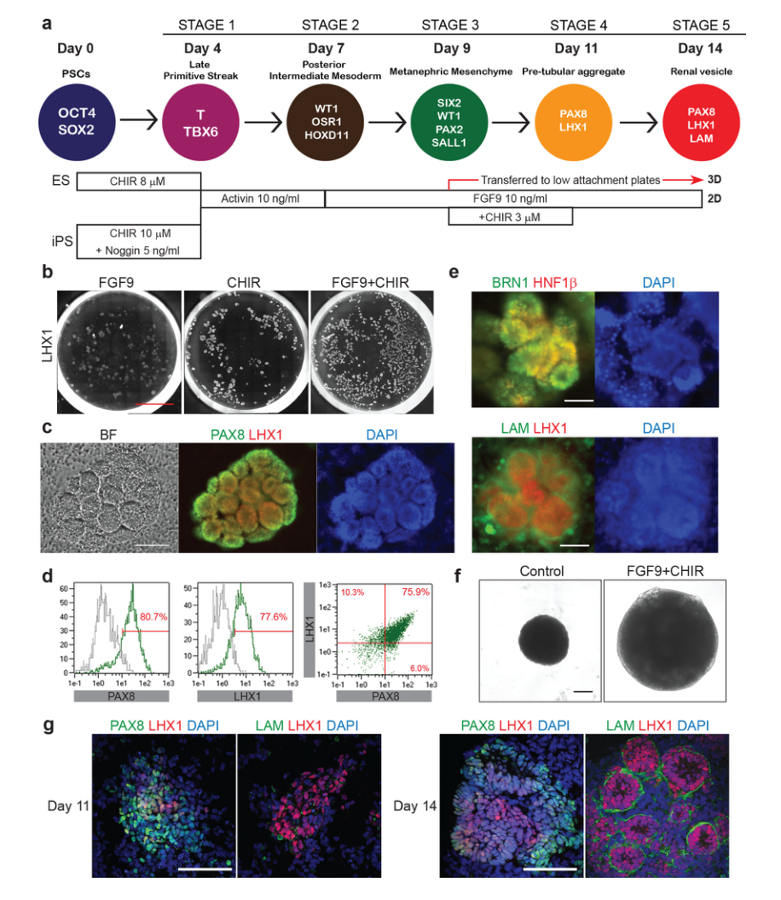
The 2015 Nature Biotechnology study described a protocol for deriving nephron organoids from human pluripotent stem cells and using them to model kidney development and injury.
Modeling how human nephron structures form from progenitor states.
Studying epithelial injury, repair, nephrotoxicity, and genetic kidney disease mechanisms.
Combining organoids with imaging, transport assays, flow systems, and bioengineering strategies.
Developing bioreactor-scale culture and automation workflows to improve maturation and batch consistency.
Exploring how engineered kidney tissues might support future therapeutic development.
Translational applications
Human organoid systems can help investigate mechanisms of kidney injury, repair, fibrosis, and inherited disease.
Human-relevant organoid platforms can support kidney safety studies for candidate therapies and perturbations.
Kidney organoid models can help explore AAV-associated kidney responses and related safety questions.
Three-dimensional imaging and quantitative analysis support high-content therapeutic discovery workflows.
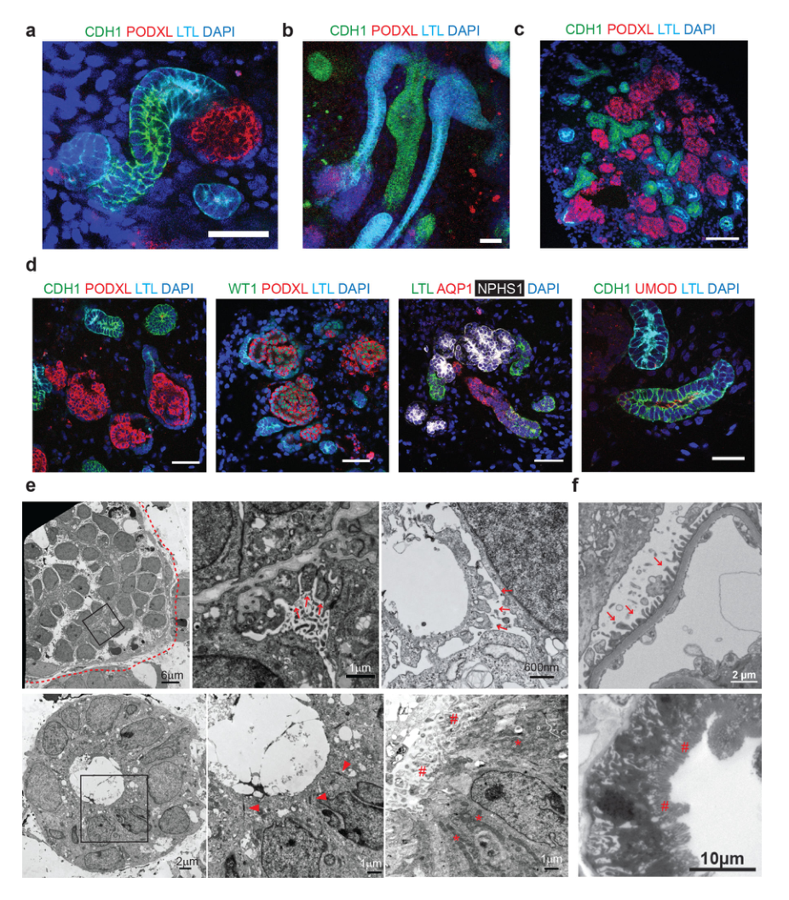
For a patient or donor audience, the important message is simple: the lab creates human kidney-like tissues in the dish so that disease and treatment questions can be studied in a more human-relevant system.
For a scientific audience, the same platform offers controllable differentiation, marker-based quality assessment, microscopy-based phenotyping, and compatibility with engineered culture systems.
FDA and NIH public materials describe a shift toward New Approach Methodologies, including organoids, organ-on-chip systems, computational modeling, and other human-relevant approaches that can reduce, replace, or refine animal testing. This does not mean animal studies are obsolete in every setting, but it strengthens the rationale for kidney organoid and microphysiological platforms.