Industry Partnerships
Partnering to Advance Human Kidney Models for Translational Discovery
The Morizane Lab collaborates with biotechnology, pharmaceutical, gene therapy, imaging, and AI-driven discovery teams to develop and apply human kidney organoid platforms for disease modeling, therapeutic evaluation, and kidney safety research.
Why partner with us
Human-relevant kidney models in the Boston biomedical ecosystem
Located in the Boston biomedical ecosystem, our lab is positioned to work closely with biotechnology and pharmaceutical partners seeking human-relevant kidney models. We can rapidly initiate collaborative studies using established kidney organoid, organ-on-chip, imaging, and molecular profiling workflows through appropriate institutional agreements.
Partnership focus
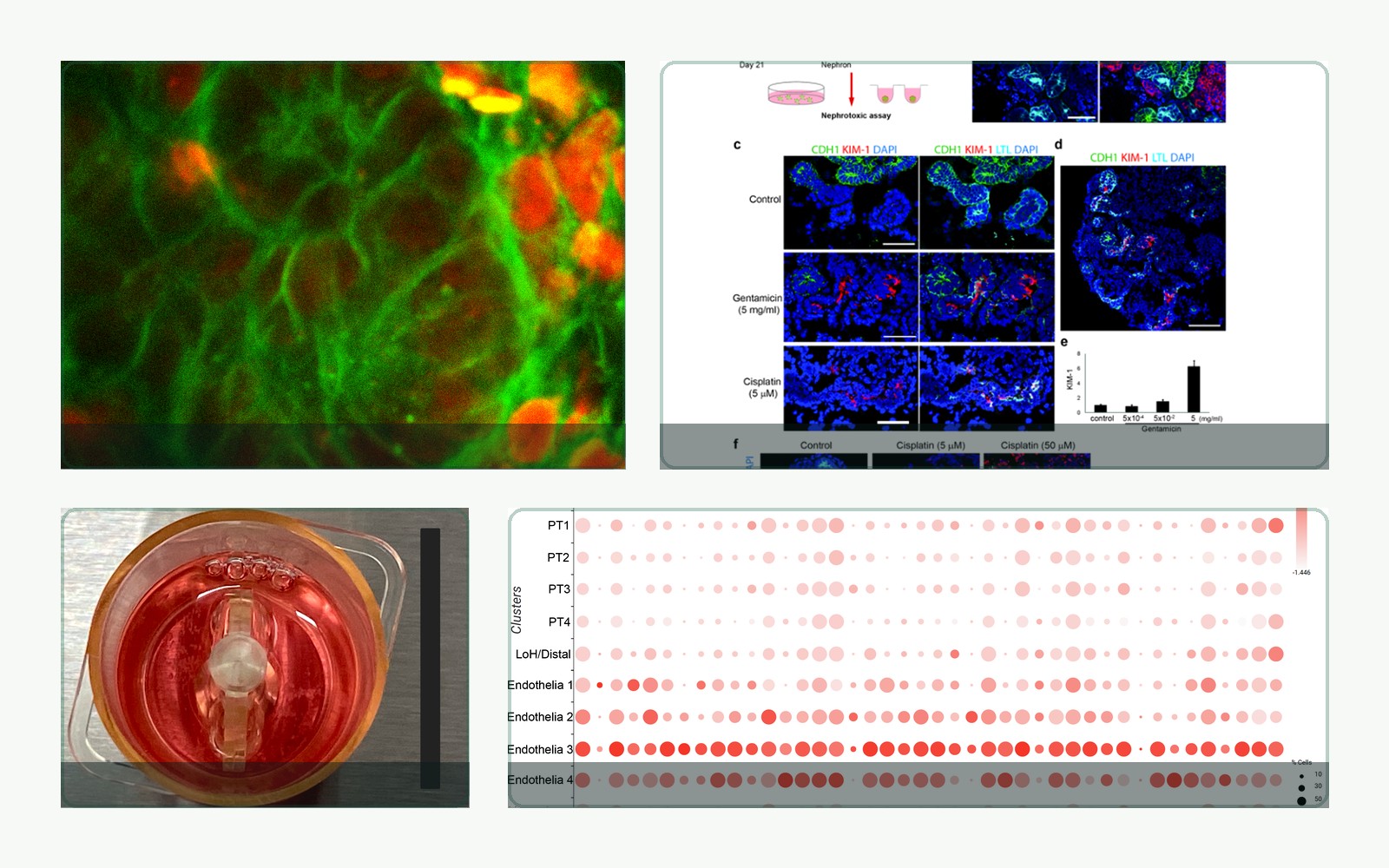
The Morizane Lab partners with industry to apply human kidney organoids, patient-derived iPSC models, organ-on-chip systems, AI-assisted 3D imaging, and molecular profiling to translational kidney research.
Collaboration areas
Designed for translational kidney questions
Nephrotoxicity and kidney safety evaluation
Gene therapy and AAV-associated kidney response studies
Patient-derived iPSC and genetically engineered disease models
Organ-on-chip and microphysiological systems
AI-assisted 3D imaging and quantitative phenotyping
High-content therapeutic screening
Single-cell and molecular profiling
Target validation in human kidney tissues
Representative collaboration examples
Recent partnership models
Organoid supply for drug efficacy studies
Provided approximately 1,000 kidney organoids to a Boston-area partner for compound efficacy evaluation, enabling large-scale phenotypic screening in a human kidney cellular context.
iPSC culture media optimization
Collaborated with a partner to optimize culture media formulations for iPSC-derived kidney organoid differentiation, improving organoid quality and reproducibility for downstream applications.
Renal characterization of a therapeutic compound
Conducted kidney-specific characterization of a partner's therapeutic compound using human kidney organoid systems, providing human-relevant safety and response data to support development decisions.
Partner names are not disclosed per standard confidentiality practices. All projects were conducted under appropriate institutional agreements.
Available platforms
Human kidney systems for collaborative research
Human iPSC-derived kidney organoids
Established organoid workflows for human kidney disease modeling and therapeutic research.
Vascularized kidney organoids
Advanced organoid systems for studying maturation, vascularization, and tissue organization.
Patient-derived iPSC disease models
Organoids that carry disease-relevant genetic backgrounds for mechanism-focused studies.
Gene-edited iPSC models
Engineered models to support genotype-phenotype and target validation studies.
Injury and repair models
Human kidney organoid systems for investigating AKI, CKD-related pathways, fibrosis, and repair.
AAV and gene therapy response models
Kidney organoid studies to explore renal responses to viral vector exposure and related pathways.
Kidney organoid-on-chip systems
Microfluidic and microphysiological systems that incorporate flow and physical cues.
Automated 3D imaging and AI phenotyping
Quantitative imaging workflows for high-content analysis and therapeutic screening.
Molecular profiling
Single-cell and molecular analysis can be incorporated when appropriate for the scientific question.
Boston-area collaboration advantage
Proximity can make live organoid studies more practical.
For Boston-area partners, proximity can make it easier to design collaborative studies involving live human kidney organoid systems, rapid experimental iteration, and direct scientific exchange. All projects are structured through appropriate institutional channels.
Sponsored research opportunities
From feasibility studies to platform development
We welcome discussions around sponsored research, collaborative research, technology development, and pilot studies. Potential projects may include therapeutic screening, kidney safety assessment, disease mechanism studies, biomarker discovery, and platform development.
Example partnership use cases
Examples of questions we can explore together
Gene therapy
A gene therapy company evaluating kidney responses to viral vectors.
Therapeutic discovery
A biotech company testing candidate compounds in human kidney organoids.
AI drug discovery
An AI drug discovery company seeking human phenotypic readouts.
Imaging and automation
An imaging or automation company validating high-content 3D analysis workflows.
Genetic kidney disease
A kidney disease company modeling genetic mechanisms in human iPSC-derived tissues.
How to start a conversation
- 1
Contact us with a short description of the scientific question.
- 2
Initial confidential discussion, if appropriate.
- 3
Define feasibility, model system, readouts, and collaboration structure.
- 4
Work through MGH institutional agreements.
- 5
Launch pilot or sponsored research project.
Collaborate with us
Interested in exploring a collaboration?
Contact us to discuss sponsored research, technology development, or translational kidney modeling partnerships. Studies are conducted under institutional policies, material transfer agreements, sponsored research agreements, and applicable compliance review.