NIH Director's New Innovator Award recipient
Dr. Ryuji Morizane received the NIH Director's New Innovator Award for work recreating kidney organogenesis in vitro with human pluripotent stem cells.
Morizane Lab
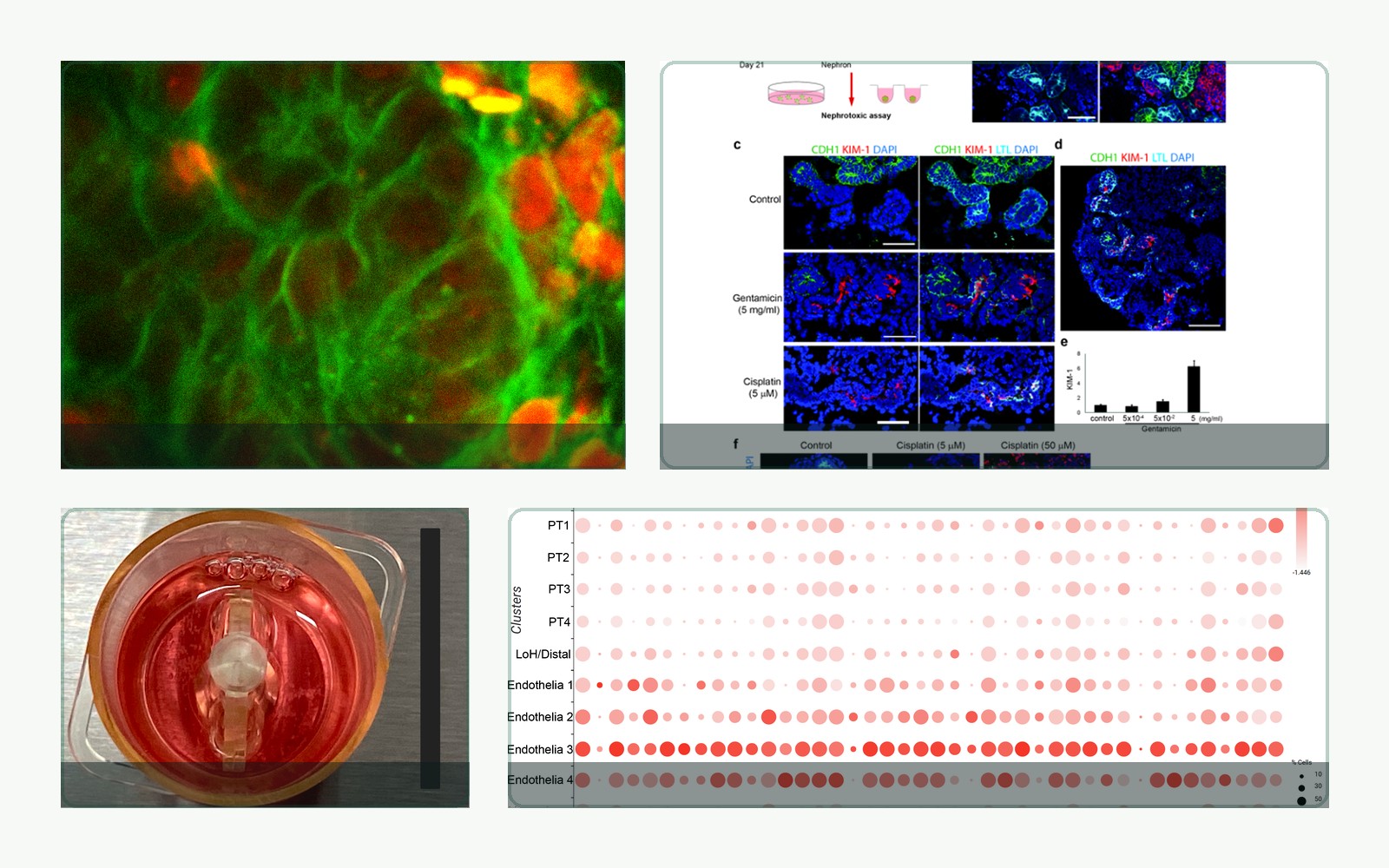
The Morizane Lab develops human iPSC-derived kidney organoids, patient-derived disease models, organ-on-chip systems, and AI-assisted imaging platforms to study kidney disease and advance safer, more effective therapeutic development.
Mission
We build human kidney models to understand kidney disease, improve therapy development, evaluate kidney safety, and accelerate translational discovery. Our work connects stem cell biology, nephrology, bioengineering, imaging, computational analysis, and therapeutic development.
Human kidney organoids can help researchers study disease mechanisms, evaluate therapeutic strategies, and ask kidney-specific safety questions in a human genetic and cellular context.
Impact & Recognition
Dr. Ryuji Morizane received the NIH Director's New Innovator Award for work recreating kidney organogenesis in vitro with human pluripotent stem cells.
The lab's work helped establish human pluripotent stem cell-derived nephron organoids and protocols for kidney organoid generation.
Lab-developed technologies have contributed to patented and patent-pending approaches in kidney organoids, organ-on-chip systems, ARPKD, and regenerative biology.
The lab brings together academic nephrology, stem cell biology, bioengineering, imaging, and therapeutic discovery within the Mass General / Harvard ecosystem.
Selected studies span Nature Biotechnology, Nature Protocols, Nature Methods, Science Translational Medicine, Science Advances, PNAS, Biofabrication, and related journals.
Our platforms support disease modeling, kidney injury and repair studies, nephrotoxicity, AAV kidney response research, and therapeutic discovery.
Why Human Kidney Models Matter
Traditional models often fail to fully predict human kidney responses to injury, drugs, and gene therapies. Human kidney organoids provide a complementary platform to study kidney disease mechanisms and evaluate therapeutic strategies in a human genetic and cellular context.
Our Platforms
Human iPSC-derived kidney tissues for modeling nephron development, injury, repair, and disease.
Kidney organoids carrying disease-relevant genetic backgrounds for mechanism-focused studies.
Advanced tissue systems for studying vascularization, maturation, and regenerative biology.
Microphysiological kidney models incorporating flow and physical cues relevant to tissue function.
Automated imaging and quantitative phenotyping for high-content organoid analysis.
Human kidney organoid systems to explore AAV-associated kidney responses and related safety questions.
Models for AKI, CKD progression, fibrosis, tubular repair, and therapeutic target validation.
Molecular readouts that can be incorporated when appropriate for the scientific question.
Modeling polycystic kidney disease and other inherited disorders in human kidney organoid systems.
Studying mechanisms of kidney injury, repair, fibrosis, and progression toward chronic kidney disease.
Developing human-relevant systems to study gene therapy safety, kidney toxicity, and drug response.
Research credibility
The lab's work spans kidney organoid generation, organoid vascularization, injury and repair biology, ARPKD organoid-on-chip disease modeling, automated 3D imaging, and gene therapy safety studies in human kidney organoids.
Support our research
Philanthropic support helps launch innovative, early-stage human kidney research that may be difficult to support through traditional funding mechanisms. Gifts should be made through the official Mass General giving system and designated to Dr. Ryuji Morizane or kidney organoid research under Dr. Ryuji Morizane.
Collaborate with us
We welcome sponsored research and collaborative projects with biotechnology, pharmaceutical, gene therapy, imaging, AI drug discovery, and kidney disease companies. Located in the Boston biomedical ecosystem, our lab can rapidly initiate collaborative studies using established human kidney organoid platforms through appropriate institutional agreements.
Sponsored research, disease modeling, nephrotoxicity, AAV kidney response studies, AI imaging, organ-on-chip systems, and platform development.
Lab updates
How human kidney organoids help researchers ask what happens after kidney cells are injured.
Why three-dimensional imaging and quantitative analysis matter for kidney organoid research.
How fluid flow and microphysiological systems can improve human disease modeling.